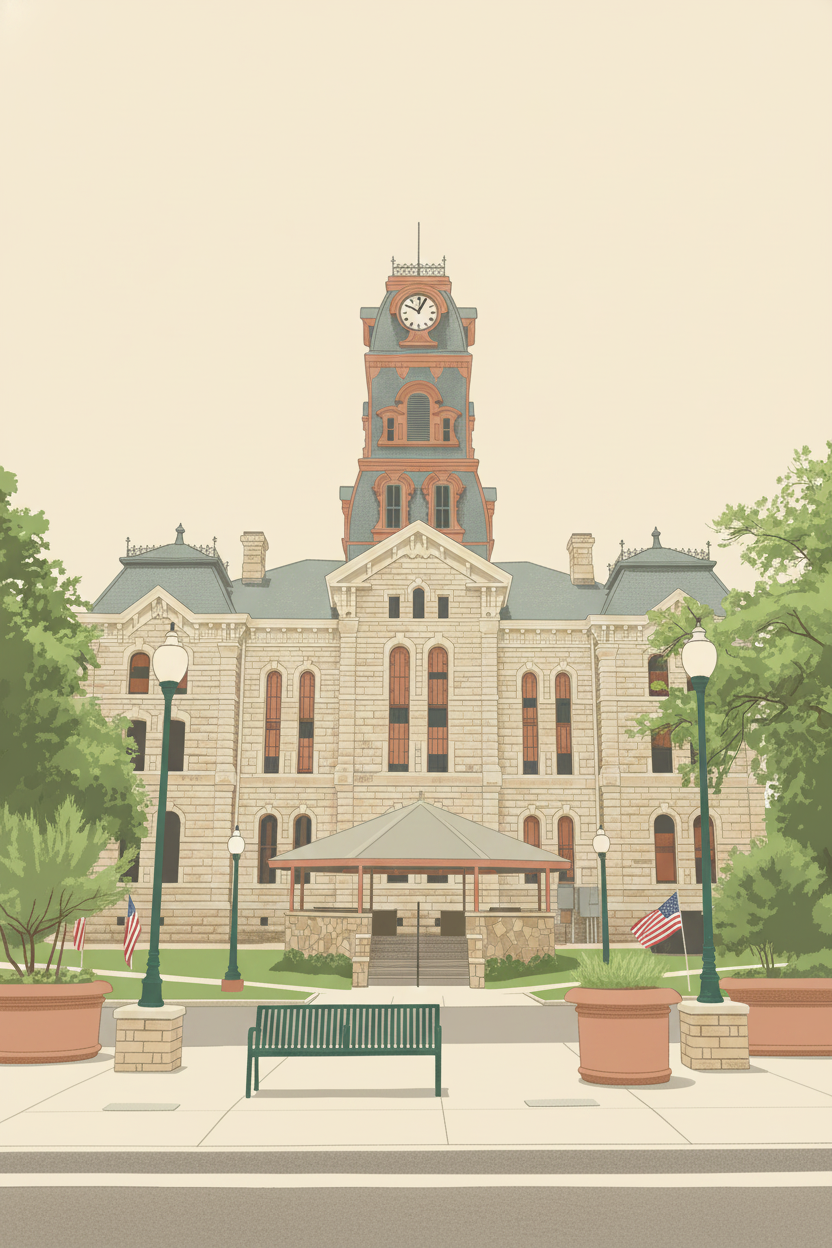
Historic Granbury Square: Downtown Living in Hood County's Heart
The Historic Granbury Square is why many people fall in love with Granbury before they ever tour a lake community. Anchored by the 1890 Hood County Courthouse — a French Second Empire limestone landmark designed by architect W.C. Dodson — the square is the first courthouse square in Texas listed on the National Register of Historic Places. USA Today has repeatedly named Granbury among America's best historic small towns, and the evidence is under your feet: restored 19th-century storefronts, the 1886 Granbury Opera House still hosting productions, more than 40 Texas historic landmarks, and a walkable loop of shops, wine bars, museums, and restaurants that stay busy year-round.
Living near the square means trading gates and fairways for footsteps and festivals — a distinct Hood County lifestyle with its own rewards and tradeoffs.
What downtown Granbury feels like
Granbury began in 1866 when brothers J. and J.H. Nutt donated riverfront land for a townsite; developers built two-story limestone structures around a central public square many of those buildings still serve commerce today. The Brazos River and Lake Granbury — created when the De Cordova Bend Dam opened in 1969 — lie minutes away, linking downtown culture to waterfront recreation through City Beach Park and lakeside paths.
Morning coffee on the square, afternoon boutique browsing, evening opera or live music, and weekend festivals are normal here — not special occasions. The Texas Legislature designated Granbury the Celebration Capital of Texas, and the event calendar proves it: Founder's Day in March, wine celebrations in spring, Harvest Moon Festival of the Arts in October, Night of Lights Christmas Parade, and dozens of smaller gatherings documented by the Historic Granbury Merchants Association and Visit Granbury.
Residents who choose downtown often say they wanted culture without a commute to Dallas — and found it 35 miles southwest of Fort Worth.
Housing near the square
Residential character radiates outward from the courthouse:
Historic single-family homes — cottages, bungalows, and Victorian-era houses on tree-lined streets within walking distance of Pearl Street and the courthouse lawn. Many properties carry renovation opportunities: updated kitchens behind limestone facades, pier or slab foundations typical of older Texas construction, and mature landscaping you cannot buy new.
Infill and newer construction — limited vacant lots mean new builds are uncommon but not impossible; city permits and design compatibility matter. Our building permits guide covers City of Granbury requirements for downtown-area projects.
Condos and multifamily — developments such as Towne Square Condos on Pearl Street place residents one block from the square with pool, fitness, and lake access amenities — appealing to buyers who want low maintenance and walkability.
Rental and mixed use — downtown includes upper-story residences above retail; understand noise, parking, and festival crowd patterns before you buy on the busiest blocks.
Flood insurance is less universal than on lakefront docks, but properties near the Brazos still deserve map review — see our FEMA flood zones guide for parcel-specific diligence.
Walkability and daily errands
Downtown Granbury solves the suburban question "where do we walk?" Groceries, pharmacies, professional services, churches, and dining cluster within blocks. The Visitor Center at 201 E. Pearl St. offers maps and self-guided walking tours — the same resources newcomers use become lifelong references.
City Beach Park connects square life to Lake Granbury without a gated community ramp. Paddle sports, picnics, and sunset walks require no HOA membership — a major lifestyle difference from Harbor Lakes or Pecan Plantation.
Schools, services, and jurisdiction
Incorporated City of Granbury addresses downtown fall under municipal utilities, Granbury building inspections, and Granbury ISD for most families — confirm boundaries street by street. Hood County offices remain relevant for property records and broader regional services.
Texas Health Huguley and medical offices south and west of downtown cover routine healthcare; Fort Worth expands specialty care. For daily life, downtown residents often handle errands entirely within Granbury.
Events as neighborhood fabric
Square festivals are not background noise — they are social infrastructure. Founder's Day bean cook-offs, wine walks, Memorial Day and Labor Day weekends, and holiday parades fill streets with vendors, music, and neighbors. Buyers who love energy thrive; buyers who need quiet weekends should tour during a festival before purchasing on the square itself.
Read our community events guide for the annual rhythm and planning tips.
Commute considerations
Fort Worth employment remains accessible via U.S. 377 and connecting highways — typically under an hour depending on destination and traffic. Many downtown residents work remotely or locally, reducing commute weight in housing decisions. DFW Airport runs are longer but manageable for travelers who accept occasional drives.
Parking during events requires patience; off-square garages and street parking fill quickly on festival weekends — factor guest parking if you entertain often.
Who historic square living fits
Ideal for:
- Empty nesters and remote workers prioritizing walkability
- Buyers who value architecture, history, and cultural amenities
- Households comfortable maintaining older homes or paying renovation premiums
- People who want lake access via parks without dock maintenance
Less ideal for:
- Buyers needing large acreage or aviation hangars
- Families seeking newest production-home subdivisions with standardized HOAs
- Anyone who prefers gated quiet over festival weekends
Explore beyond the square loop
Granbury's story extends to Acton's rural heritage, DeCordova's lake club, and Pecan Plantation's resort scale — but the square remains the region's shared living room. Our neighborhood overview helps compare downtown against lake options.
Research checklist
- Walk the square at night and during a busy festival
- Inspect older homes for foundation, roof, plumbing, and HVAC age
- Confirm city zoning, parking easements, and any historic district guidelines
- Run insurance quotes including wind and hail typical in North Texas
- Test commute to your workplace if not fully remote
- Visit Granbury Opera House or a shop you would actually frequent post-move
Why the square endures
Historic Granbury Square endures because it is alive — not preserved under glass. Limestone walls hold boutiques instead of vacancies; the courthouse clock still defines the skyline; neighbors still argue cheerfully about parking on Founder's Day. If you want Hood County life with the square outside your door, downtown Granbury offers a rare Texas combination: genuine history, active commerce, and lake country minutes away.